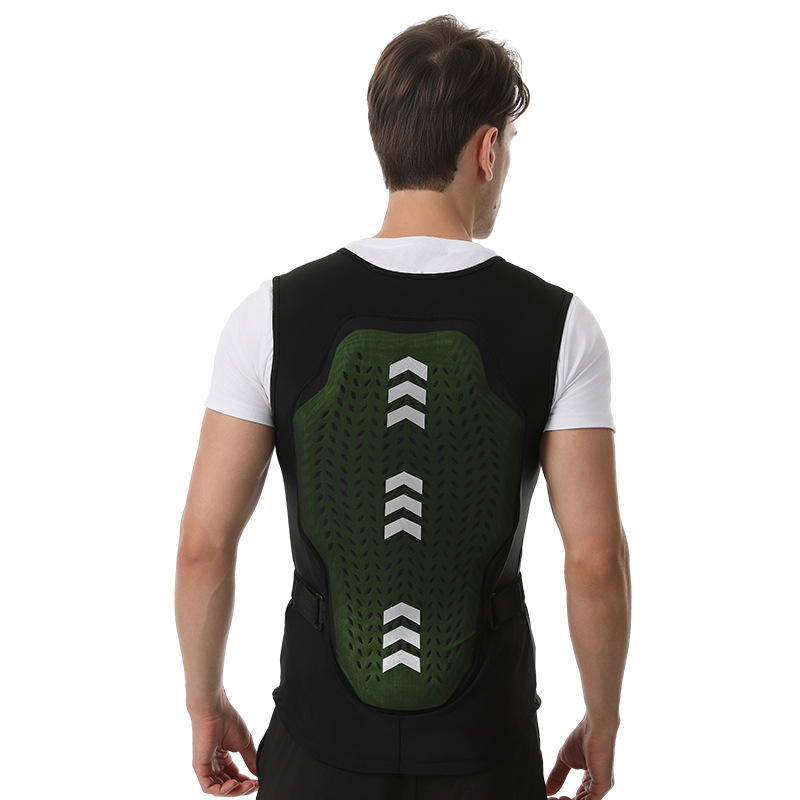
Choosing between a Level 1 and Level 2 ski back protector comes down to two factors: how aggressively you ride and how much impact protection your spine needs. Both are certified under EN 1621-1, the European standard for motorcyclist and skier back protection, but they differ significantly in transmitted impact force — the residual energy your spine absorbs during a fall. Level 1 protectors transmit an average impact below 18 kN, while Level 2 protectors transmit below 9 kN — roughly half the force. For most recreational skiers and snowboarders, Level 1 offers the best balance of protection, weight, and flexibility. Level 2 becomes important for backcountry skiers, racers, park riders, and instructors who take hard, high-speed falls onto icy or rock-hard packed snow.
What is EN 1621-1 and why does it matter?
EN 1621-1 is the European standard that measures impact protection performance for motorcyclists and skiers. The test uses a calibrated anvil dropped onto the protector at a fixed energy level; sensors measure the force transmitted through the pad. A protector passes Level 1 if transmitted force stays below 24 kN at any single impact and below 18 kN on average. Level 2 doubles that requirement: no single impact above 12 kN and average below 9 kN. In practice, Level 2 pads absorb roughly twice the energy of Level 1 pads per square centimeter. PEONYHK manufactures both Level 1 and Level 2 back protectors (the BP-001 series carries EN 1621-1 Level 1 certification; the BP-005 series is rated Level 2), giving buyers a clear, tested option for either protection tier.
Level 1 vs Level 2: Real-World Differences
The performance gap between the two levels is not just a number on a test report. Skiers moving from Level 1 to Level 2 typically feel a noticeable increase in weight — anywhere from 50 to 150 grams depending on coverage area — and a slight reduction in ventilation. The trade-off is meaningful in high-impact situations: a Level 2 back protector spreads crash energy over a larger area and reduces peak force on the spine by up to 45 percent compared with Level 1. For mogul skiers, freestyle snowboarders, ski instructors logging 40+ days a season, or anyone riding off-piste regularly, Level 2 is the safer choice. For resort-based groomers, casual skiers, and most beginners, Level 1 provides more than adequate protection without sacrificing comfort.
When Level 1 Is the Right Choice
Level 1 back protectors are the best option for first-time buyers, occasional weekend skiers, and adults learning new terrain. They are also well suited to all-day ski-school instructors whose falls tend to be lower-speed and softer than backcountry riders. Choose Level 1 if you ride mostly groomed runs, blue and red pistes, and indoor snow domes. The PEONYHK BP-001 Adult Sports Back Protector and BP-004 Junior Back Protector are Level 1 certified and weigh just 380–450 grams, fitting comfortably under most ski jackets without restricting movement.
When Level 2 Becomes Essential
Level 2 protection matters most when impact severity increases. Off-piste skiing on rocky terrain, big-mountain descents, terrain park jumps, and competitive racing all involve higher fall velocities and harder surfaces. The EN 1621-1 Level 2 rating ensures the pad will not bottom out on sharp, fast impacts. For first-responder ski patrol, mountain guides, and film production crews who work in avalanche-prone terrain, Level 2 is non-negotiable. Riders with prior spinal injuries, herniated discs, or osteoporosis should also default to Level 2 regardless of skill level.
Fit, Ventilation, and Wearability Factors
Beyond the certification level, fit quality determines whether a back protector is actually worn. A protector that shifts during skiing does not protect the right area. Look for adjustable shoulder straps, a waist belt that locks the pad down at the hips, and ergonomic 3D patterning that follows the natural curve of the spine. PEONYHK back protectors use a multi-density foam layout — thicker at the center vertebrae and tapered at the edges — which both improves fit and reduces bulk under ski clothing. Breathable mesh channels along the spine help evacuate heat and moisture during full-day wear. All-day comfort matters more than protective ratings on paper; a Level 2 protector left in the locker is less safe than a Level 1 actually worn.
Frequently Asked Questions
Is Level 2 worth the extra cost for beginners?
For most beginners skiing on groomed, patrolled runs, Level 1 protection is more than sufficient and offers better comfort at lower weight. Save the Level 2 upgrade for when your skill level naturally progresses to faster speeds or more demanding terrain.
Can I wear a back protector under any ski jacket?
Most modern ski jackets have enough room for a thin Level 1 protector, but bulkier Level 2 protectors may require one or two sizes up. PEONYHK designs its protectors with race-cut slim profiles that fit under standard ski jackets without compromise.
How long does a ski back protector last?
A well-cared-for protector lasts 4–6 years of regular use, or about 150–200 ski days. After a major crash where the protector takes direct impact, replace it even if no visible damage is present — the internal foam structure may be compromised.
Are soft foam protectors safer than hard-shell options?
Not necessarily safer, but more wearable. Modern soft-foam protectors using materials like D3O or low-temperature EVA absorb multiple impacts and stay flexible in cold weather, while hard-shell protectors excel at single high-impact events but feel bulky under clothing and are less comfortable for all-day use.
PEONYHK supplies both EN 1621-1 Level 1 and Level 2 ski back protectors, with full OEM/ODM customization available for brands looking to source a private-label solution. Sample lead time is 5–7 days from initial request.