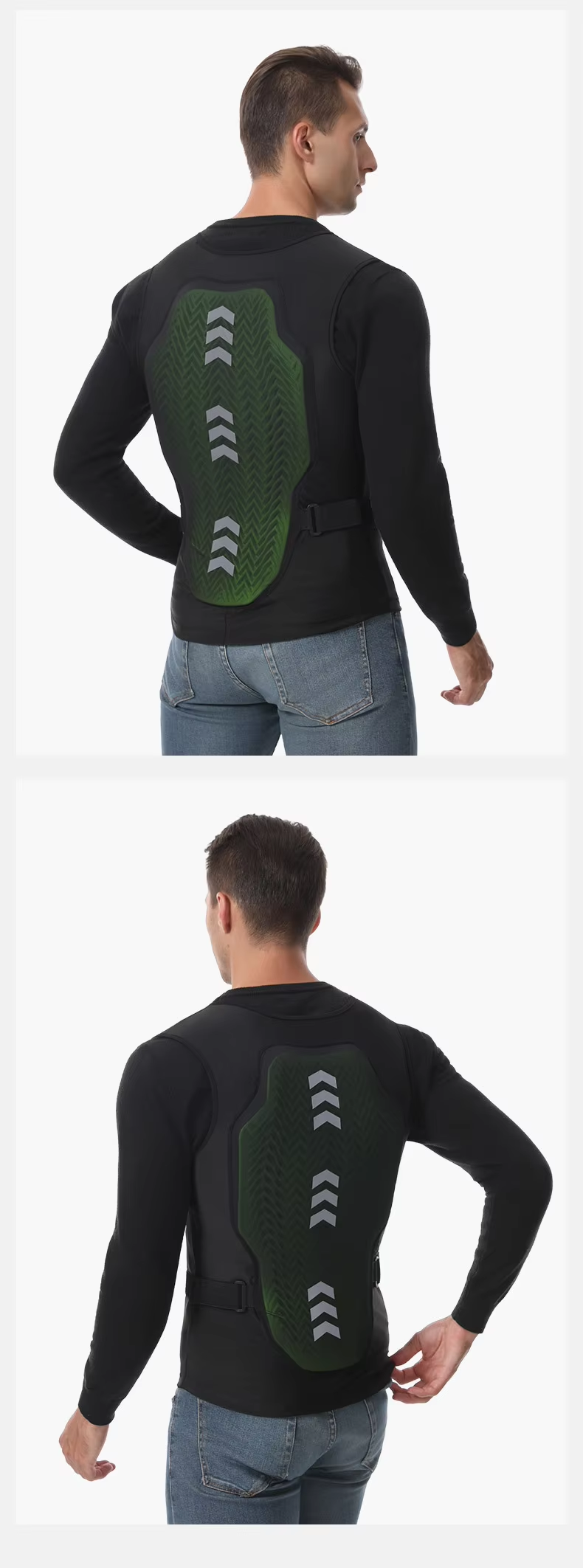
Cold weather fundamentally changes the protective performance of ski and snowboard gear. Foam that feels soft and pliable in a showroom becomes stiff, hard, and less shock-absorbent once it hits -15°C on a high-altitude mountain. Understanding how temperature affects each protection material — and what to look for when buying — is critical for riders who ski in real winter conditions rather than just casual groomer days. This article explains the science behind cold-weather performance, the certification standards that test for it, and the practical steps brands and riders should take to ensure gear performs in real mountain conditions. PEONYHK designs all its protection equipment for cold-weather performance, with materials tested at -20°C and field-validated across European and North American mountain ranges.
Why Cold Weather Breaks Standard Foam
Closed-cell EVA and standard polyurethane foam harden as temperature drops because their polymer molecular structure slows down and becomes more rigid. At room temperature (around 20°C), standard EVA has a shock-absorption efficiency of 50–60% on impact. By -10°C, that drops to 35–45%. By -20°C, it falls below 25% — meaning a pad that absorbs half the crash energy at room temperature now absorbs only a quarter at typical alpine temperatures. This is why a protector that feels great in the shop can fail on the mountain. The foam is still physically present but no longer capable of converting impact energy into heat via controlled deformation. Cold-rated materials solve this problem by using different polymer blends, anti-freeze additives, or engineered molecular structures that remain flexible even at extreme temperatures.
Cold-Tolerant Material Categories
Three categories of materials deliver reliable cold-weather performance. Cold-tolerant EVA blends standard EVA with nitrile rubber or thermoplastic elastomers, extending usable performance down to -30°C without major stiffness gain. This is the workhorse of mid-tier ski protectors. Smart foams like D3O and XRD use non-Newtonian or phase-change chemistry that works nearly identically across a wide temperature range — D3O to -20°C, XRD to -40°C. Multi-layer hybrid designs combine a cold-tolerant foam base with a softer top layer that activates first on impact, providing effective impact absorption even when the underlying foam stiffens. PEONYHK uses category-1 cold-tolerant EVA in its entry line and category-2 D3O/XRD in its mid- and high-end lines for this reason.
The Low-Temperature Foam Test Standard
EN 1621-1 specifies that protectors should be tested at 20°C (room temperature). Most of the world's ski protection is certified only at this baseline temperature — even though actual use happens in much colder conditions. The lack of a mandatory low-temperature test is a known industry gap. Some manufacturers, including PEONYHK, voluntarily test their protectors at -20°C in addition to the standard test to confirm field performance. A "low-temp rated" protector typically transmits no more than 1.5× the impact force at -20°C versus the same test at room temperature. PEONYHK publishes both 20°C and -20°C test results for products where cold-weather performance is critical, including the BP-005 back protector and P-1 padded short.
Real-World Riding Conditions vs Lab Testing
Lab testing under EN 1621-1 measures single-point impact at a standardized anvil drop. Real skiing produces multiple impacts — from falls, slams into hard-packed snow, hits on icy patches, and (in the backcountry) collisions with rocks or trees. A protector that performs well in a single drop test may not survive 30 real falls in a season. Multi-impact recovery is a separate material property: D3O and XRD both recover from multiple hits, while standard EVA foam permanently deforms after just a few hard impacts. PEONYHK subjects its protectors to multi-impact test cycles (20 drops at -10°C, then 20 more drops at room temperature) to validate real-season durability before products are released.
Buying Cold-Weather Ski Protection
When sourcing or buying ski protection for cold environments, verify four things. First, confirm certification covers at least EN 1621-1 Level 1 (Level 2 if you ride aggressively). Second, request low-temperature test data — ideally published at both 20°C and -20°C. Third, identify the foam type by name (D3O, XRD, cold-tolerant EVA) rather than generic "high-density foam." Fourth, ask about multi-impact recovery tests. PEONYHK publishes a Cold-Weather Performance Specification sheet for each product, covering all four data points. Brands sourcing OEM equipment should request the same documentation from any Chinese factory they evaluate.
Frequently Asked Questions
At what temperature does standard EVA stop working?
Standard EVA foam begins losing meaningful shock absorption below about -5°C and becomes nearly rigid by -15°C. Cold-tolerant EVA formulations extend usable performance down to -30°C and are recommended for any rider who regularly skis below -10°C.
Does the EN 1621-1 standard require cold-temperature testing?
No. EN 1621-1 specifies testing at 20°C only. Cold-weather performance is not part of the standard, so it falls to manufacturers to voluntarily test and publish low-temperature data. PEONYHK voluntarily tests all cold-weather products at -20°C and publishes both results.
Can I keep ski pads soft in cold weather by storing them indoors?
Wearing them under your ski jacket helps maintain some warmth through body heat, but the foam will still drop below freezing within minutes of skiing cold wind at speed. The only reliable solution is buying protectors made from cold-rated materials in the first place.
What about heated protectors?
Some brands sell battery-heated protectors. They work but add weight, require charging, and the heat does not always reach the deepest impact zones. Cold-rated materials are simpler, lighter, and more reliable for typical ski use.
Need cold-rated ski protection for a B2B project? PEONYHK's full back-protector and hip-protector line uses cold-tolerant foam, D3O, and XRD materials tested at -20°C. Sample lead time 5–7 days, full production 15–25 days, custom OEM available from 100-piece MOQ. Contact vivi@hkpeony.com to request specs.