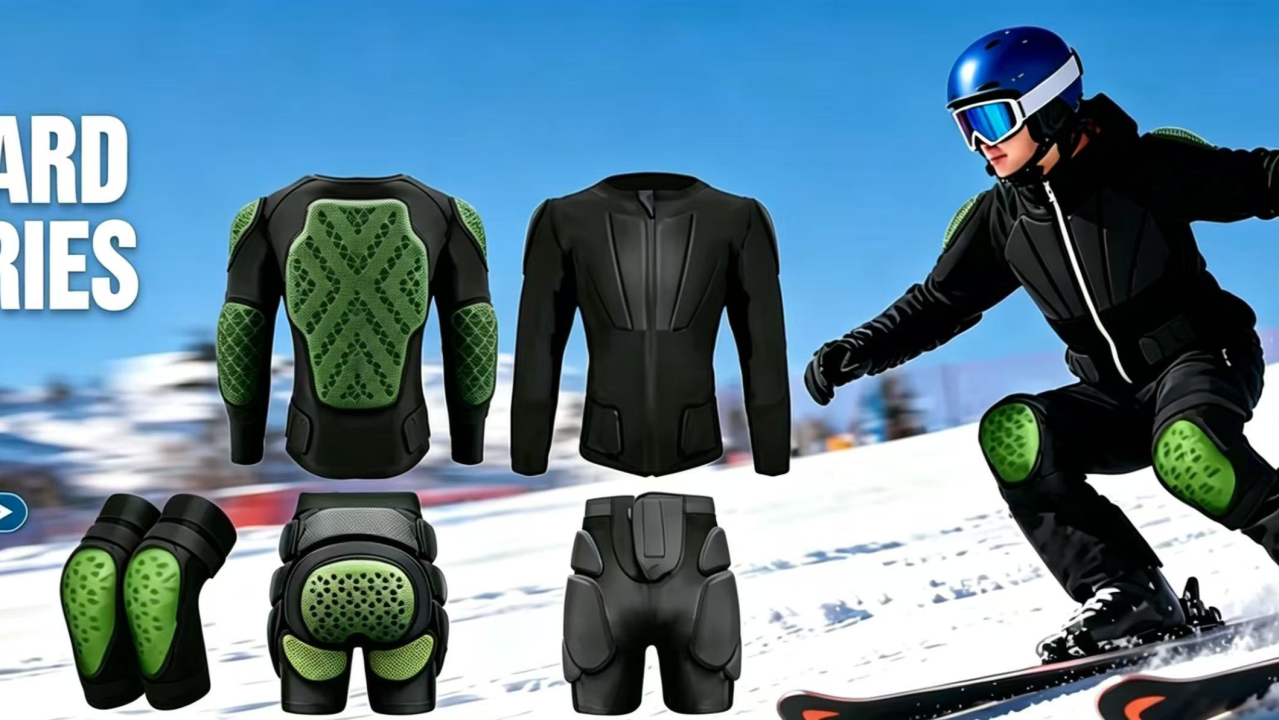
You don’t need full body armor to ski safely, yet picking suitable protective gear greatly boosts your confidence and comfort on ski slopes. This guide sorts out must-have and scenario-specific ski safety equipment. If you want to learn slope safety regulations, our piste rules guide breaks down the official FIS code in plain language. For practical skiing preparation tips, our slope safety guide covers warm-up routines and terrain reading skills in full detail.
1. Ski Helmet
A helmet is the most vital piece of ski safety equipment. Head trauma accounts for most severe skiing injuries, and a properly fitted helmet drastically lessens injury severity. Italy enforces mandatory helmets for all skiers under 18; regardless of local laws or age, wearing one is always wise.
Modern ski helmets are lightweight, breathable, and compatible with ski goggles and audio devices. They also retain heat far better than regular hats on cold, windy days. Helmets can be rented at most ski resorts, but frequent skiers benefit from owning a custom-fitted one. Prioritise models with adjustable sizing dials, detachable ear pads and EU EN 1077 safety certification. Helmets built with MIPS liners are highly recommended: this low-friction layer minimises rotational brain damage during falls and has become mainstream on premium designs.
Key Benefits
Cuts risks of life-altering head injuries, the leading serious skiing harm
Maintains steady warmth and comfort in all weather conditions
Legally required for minors in Italy and multiple Austrian regions
2. Ski Goggles
Goggles serve far more than keeping snow out of your eyes. They block intense high-altitude UV rays, sharpen vision during snowfall or dull flat light, and shield facial skin from bitter wind chill. Sunglasses only work on calm, bright sunny days — goggles are indispensable once weather conditions shift.
Lens tint matters more than brand performance: dark mirrored lenses suit bright sunshine; orange, rose or yellow lenses boost contrast on cloudy days. For one-pair packing, versatile all-condition/photochromic tint lenses work best across varied weather, though photochromic lenses adjust slower in frigid temperatures.
Key Benefits
Eliminates blurred vision in flat light to help you judge terrain accurately
Shields against wind and snow so you can ski longer comfortably
3. Back Protector
Back protectors seem unnecessary until you suffer a hard fall. They disperse impact force across your spine, lowering risks of vertebral injuries caused by crashes, collisions or impacts with icy, compacted snow. Intermediate and advanced skiers travelling at higher speeds on varied terrain should definitely wear one.
Two mainstream styles are available:
Soft foam protectors: Built with shock-activated foam (D3O material etc.), thin, flexible and unnoticeable underneath ski jackets — ideal for casual recreational skiers with CE safety certification.
Hard-shell protectors: Rigid plastic panels deliver superior spinal protection but feel bulky.
Many ski jackets now feature built-in back padding for extra convenience.
Key Benefits
Prevents devastating spinal injuries, rare yet extremely serious in skiing accidents
Ultra-thin flexible modern designs cause no movement restriction
Widely required for kids and teens at European ski schools
4. Wrist Guards
Wrist fractures rank as the most common snowboarding injury and frequently affect beginner skiers too. People instinctively stretch out hands to break falls, putting massive pressure on wrist joints. Wrist guards immobilise wrists and spread impact force to drastically reduce fracture risks.
Snowboarders gain the most from this gear, while novice skiers will also feel more secure. Opt for gloves with integrated wrist support; standalone guards worn over gloves are cumbersome and hinder ski pole gripping.
Key Benefits
Greatly lowers wrist fracture risks for frequent fallers
Boosts confidence for new skiers still learning proper falling techniques
Integrated wrist-support gloves offer the most user-friendly experience
5. Impact Shorts
These padded compression shorts are worn under ski trousers to cushion your hips, tailbone and thighs against painful bruises from repeated falls. Even slow tumbles on icy slopes can leave you sore for days.
Snowboarders fall backward far more often, making these shorts a staple for beginners. Anyone skiing on firm snow or steep slopes will appreciate the cushioning. They are lightweight, all-day wearable and completely hidden beneath ski pants.
Key Benefits
Stops painful hip and tailbone bruising that cuts your skiing time short
Essential for snowboarders and those learning on hard packed snow
Slim fit with zero impact on leg movement
6. Knee Braces & Supports
ACL tears and other knee ligament injuries are the top severe injury in alpine skiing. Turning, braking and falling all exert heavy strain on knees, and rigid ski boots transfer this stress upward to joint tissues.
Knee braces cannot fully prevent injuries, but they stabilise knees and enhance muscle sensory feedback for quicker reactions under strain. They are most suitable for skiers recovering from past knee injuries, those with loose ligaments, or advanced skiers tackling demanding terrain at high speeds. Skiers with healthy knees may wear braces optionally, yet medical data proves they effectively reduce injury risks for vulnerable groups.
Key Benefits
Provides extra joint stability to avoid ACL tears, the most prevalent serious ski injury
Perfect for athletes returning to skiing post knee surgery
Gentle compression eases muscle fatigue during long ski days
7. Avalanche Safety Kit
An avalanche safety set is mandatory for off-piste skiing (untracked, unpatrolled areas beyond marked slopes). The full kit includes three non-negotiable components:
Single pieces are useless without the full set. You must also master operation skills: most ski schools and mountain guides offer short training courses covering search methods, efficient digging and basic avalanche awareness.
For dedicated off-piste enthusiasts, avalanche airbag backpacks are an optional upgrade. Deployed during slides, the inflated bag increases body volume to keep skiers near the snow surface. Airbags serve as supplementary protection and can never replace the transceiver-probe-shovel trio.
Key Benefits
Three core tools form the minimum safety standard for all off-piste excursions
Hands-on training is just as critical as carrying the equipment
Airbag backpacks add extra safety but do not substitute essential rescue gear
8. High-Altitude Sun Protection
Though not traditional protective gear, sun care is critical for high-altitude skiing. UV intensity rises 10–12% per 1,000 metres elevation gain, and snow reflects 80% of UV rays, exposing your skin to sunlight from above and below simultaneously. Severe sunburn develops rapidly at 2,000 metres above sea level, even on cloudy days.
Apply SPF50 broad-spectrum sunscreen to all exposed skin, reapply every two hours or after sweating heavily. Remember UV-protective lip balm, the underside of your nose, earlobes and skin gaps between goggles and neck warmers. UV400 certified goggles shield your eyes; if you wear sunglasses instead, ensure they are rated for high-altitude UV resistance.
Key Benefits
Counters drastically intensified high-altitude UV radiation
Eliminates dual UV exposure from sky and snow reflection
Prevents easy burns on easily overlooked areas (lips, nose base, ears)
Frequently Asked Questions
Can I rent ski safety gear at European resorts?
Helmets are widely available for hire across nearly all European ski stations, often bundled with ski and boot rentals. Back protectors and wrist guards are only stocked at larger rental stores. Impact shorts and knee braces should be brought from home, as proper personalised fit matters and rentals are extremely uncommon.
Do beginners need a back protector?
New skiers fall frequently yet at low speeds on gentle slopes, so severe spinal injury risks remain low. Even so, lightweight soft padding prevents painful bruises on hard snow and lets you ski without discomfort. Most European ski schools now recommend or require back protectors for children and teenagers.
Is avalanche equipment necessary for staying on marked pistes?
No. Official groomed slopes are constantly monitored and secured by ski patrol teams, so avalanche kits are unnecessary here. You must carry the full safety set once you step into any off-piste terrain, even briefly. Our piste rules guide elaborates on the differences between patrolled runs and backcountry areas.
What SPF rating is ideal for skiing?
SPF50 is the universal standard for mountain skiing. High altitude and snow reflection amplify UV exposure drastically, and cloud cover cannot block harmful ultraviolet rays fully. Reapply sunscreen every two hours, use dedicated UV lip balm, and never rely on facial moisturiser with weak built-in SPF.
Are MIPS helmets superior to standard ski helmets?
MIPS technology adds a sliding inner liner that lets the helmet rotate slightly upon angled impacts, effectively reducing rotational brain trauma — the most common injury cause in skiing. Independent tests confirm its protective advantages. If budget permits, choose a MIPS helmet; a well-fitted CE-certified standard helmet is still far safer than skiing without any head protection.
Planning your upcoming ski getaway? PeonyHK supplies premium, reliable ski safety gear to keep you fully protected on the mountains.