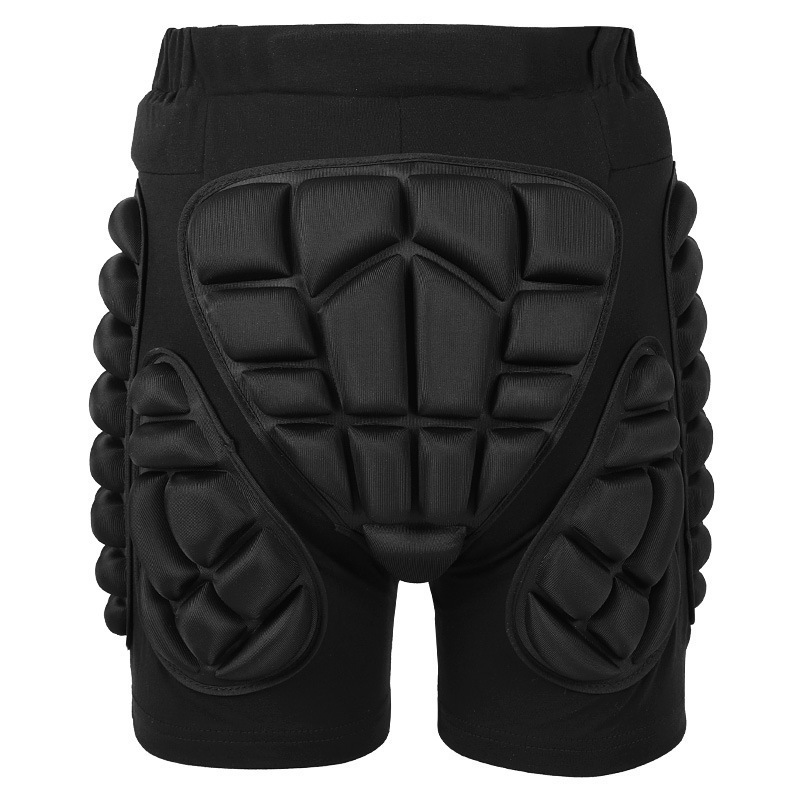
If you’re a ski brand, an Amazon seller, or a crowdfunding founder looking for an OEM manufacturer for ski impact shorts in China, you’ve probably discovered that the options are overwhelming. Alibaba alone lists hundreds of factories. How do you choose?
I’ve been manufacturing ski protection gear in Dongguan, China since 2009. I run PEONY HK Limited, and I’ve worked with European ski brands, Amazon sellers, and crowdfunding projects. Here’s the practical guide I wish someone had written for me when I started.
Step 1: Understand the Material Hierarchy
The single most important factor in ski protection quality is the impact-absorbing material. Here’s the hierarchy:
EVA Foam (Budget Tier)
- Most common material, used by 80% of products on Amazon
- Lightweight, inexpensive, adequate for casual skiers
- Price: $5-15 per pair FOB China
- Amazon retail: $15-35
- Best for: entry-level products, volume sellers
XRD Foam (Mid-Tier)
- Premium impact material that stays soft during movement but hardens on impact
- Better cold-temperature performance than standard EVA
- Price: $25-40 per pair FOB
- Amazon retail: $40-80
- Best for: mid-range brands wanting differentiation
D3O / VPD (Premium Tier)
- Smart materials used by Burton, POC, Demon
- CE Level 2 certified, highest impact protection
- Price: $60-100+ per pair FOB
- Amazon retail: $100-180
- Best for: premium brands, racing, ski patrol
Ask your factory which tier they offer. If they can’t explain the difference, they don’t understand their own product.
Step 2: Check Certifications — Specifically EN 1621
“CE certified” means nothing without the specific standard number. For ski protection, the key standards are:
- EN 1621-1 — limb protection (knee, elbow, hip)
- EN 1621-2 — spine/back protection
- Level 1: ≤ 18 kN force transmitted
- Level 2: ≤ 9 kN force transmitted (more protective)
If a factory says “CE certified” but can’t produce the EN 1621 test report with a lab number, the certification is likely fake or irrelevant.
At PEONY HK, all our products carry EN 1621-1 or EN 1621-2 certification, plus ISO 9001:2015. When comparing factories, count their certifications — it’s a proxy for how seriously they take quality.
Step 3: Evaluate MOQ and Sampling Flexibility
Here’s a truth most factories won’t tell you: high MOQ factories often have worse quality control on small orders. They’re optimized for 5,000-piece runs, and when you order 100 pieces, your order gets deprioritized.
Look for factories that have genuinely low MOQs:
- Mega factory: 1,000-5,000 pcs (small orders deprioritized)
- Mid-size factory: 100-500 pcs (good for established brands)
- Specialist factory: 5-50 pcs (supports new brands, testing)
At PEONY HK, our MOQ starts at 5 pieces for some products, 20 pieces for most. We sample in 3-5 days. This isn’t because we can’t handle large orders — it’s because we want to help brands test before they commit.
Step 4: Assess Specialization
This is the most overlooked factor. Most Chinese factories that claim to make “ski protection” actually make:
- Basketball knee pads
- Yoga accessories
- Motorcycle armor
- Roller skating gear
- Ski protection (occasionally)
A factory that makes everything makes nothing well. Specialization matters because:
- Material expertise: A ski-only factory understands cold-temperature performance, snow-specific impact patterns
- Stitching quality: Hand-stitching outperforms machine stitching for impact gear
- Design feedback: A specialist can tell you “this foam placement won’t work for snowboard falls” — a generalist can’t
We’re the only factory I’ve found in China that makes exclusively ski and snowboard protection. Nothing else. 28 products, all protection gear.
Step 5: Verify Factory Claims
Don’t trust factory websites. Verify independently:
- Ask for video call — see the actual factory floor, not a showroom
- Request the EN 1621 test report — with lab name and report number
- Order samples — test them yourself or send to a third-party lab
- Ask for references — a factory with real clients will have someone who’ll vouch for them
Step 6: Compare Pricing Realistically
Here’s a realistic FOB-to-retail markup for ski protection:
| FOB Price | Expected Retail | Markup | Margin |
|---|---|---|---|
| $5-10 | $15-25 | 2-3x | 40-55% |
| $13-20 | $25-40 | 1.5-2.5x | 35-50% |
| $25-40 | $40-80 | 1.5-2x | 30-45% |
| $60-100 | $100-180 | 1.5-1.8x | 25-40% |
If a factory quotes you $5-8 FOB minimum for impact shorts, the material is low-density EVA that won’t pass EN 1621. Real ski protection with CE certification starts at $13-20 FOB.
Conclusion
Choosing a ski protection manufacturer comes down to 6 things:
- Material tier: EVA → XRD → D3O
- EN 1621 certification with real test report
- MOQ flexibility: low MOQ = factory respects small orders
- Specialization: ski-only > multi-sport
- Verifiable claims: video call, test reports, references
- Realistic pricing: you get what you pay for
If you want to talk specifics, WhatsApp me at +86 136 8492 5325 or email vivi@hkpeony.com. I’m happy to send samples, share test reports, or just answer questions — even if you don’t end up ordering from us.
Vivi Lo is the founder of PEONY HK Limited, a specialized ski and snowboard protection gear manufacturer in Dongguan, China. The company holds 7 quality certifications and produces 28 products including impact shorts, knee pads, back protectors, and body armor. Website: www.hkpeony.com.